
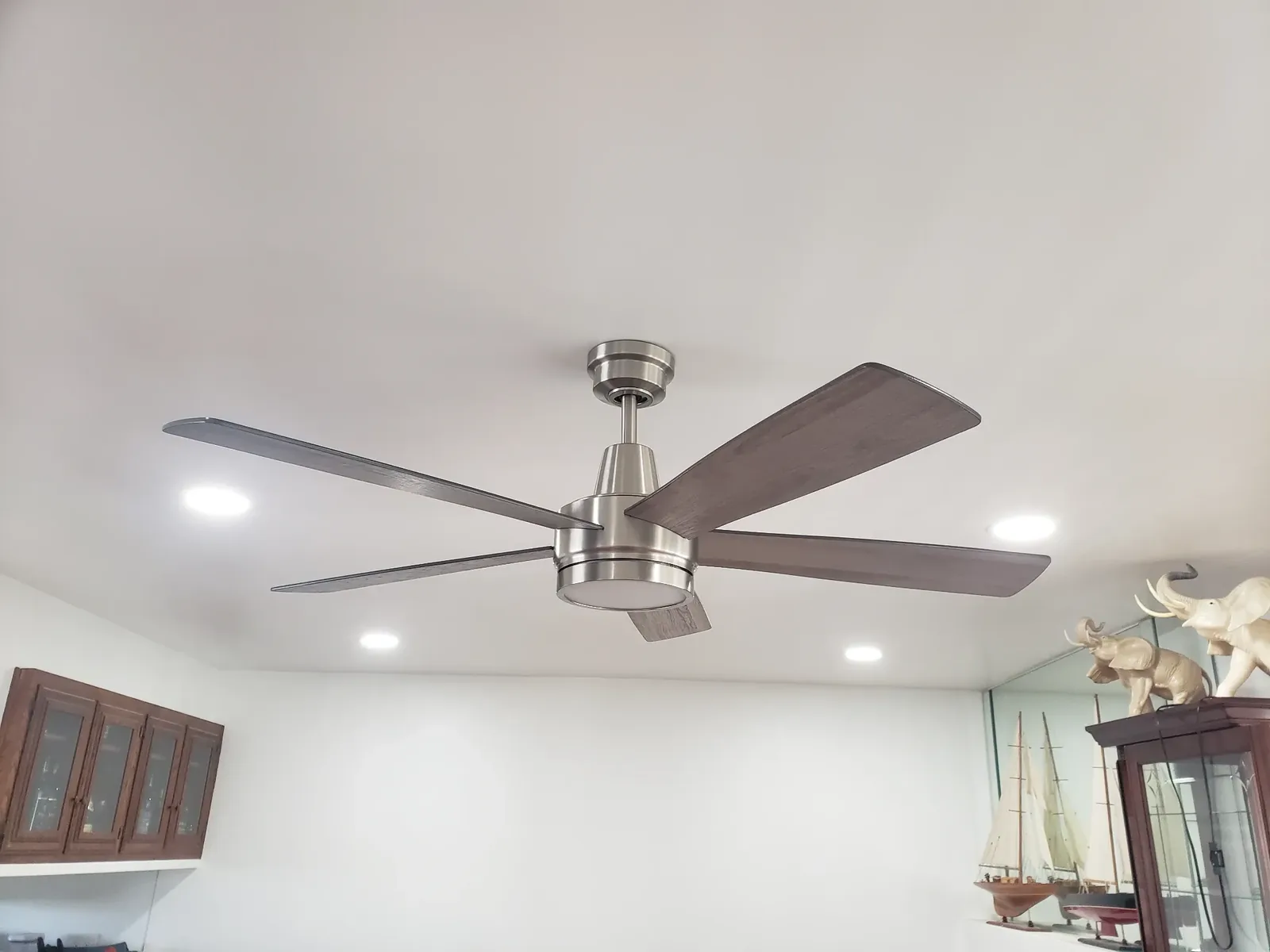
Installing a ceiling fan may look simple, especially when a light fixture already exists in the desired location. But a ceiling fan creates movement and mechanical load that a standard light-fixture box may not be designed to support. The mounting and electrical conditions should be checked before installation.
Is the Existing Electrical Box Fan-Rated?
This is one of the first things to determine. A box that safely supports a light fixture is not automatically suitable for a ceiling fan. The fan needs an approved support method appropriate for the fan and ceiling conditions.
Replacing an Existing Fan vs. Adding a New Fan
Replacing an existing properly installed fan can be different from installing a fan where none existed before. A new location may require wiring, a fan-rated support box, switch changes and access through the ceiling or attic. Existing construction can affect how the work is approached.
Fan Size and Room Size
Fan dimensions should make sense for the room and mounting location. Blade clearance, ceiling height, nearby walls, cabinets and doors should be considered. On higher ceilings, the mounting configuration can affect both appearance and air movement.
Wall Controls, Remote Controls and Existing Wiring
Some fans use a remote, some use wall controls and others can be configured for separate fan and light controls. Existing wiring can determine which options are practical without additional wiring. Decide how you want to control the fan before installation rather than after it is mounted.
Fans With Integrated Lights
If the fan includes a light, think about how that light works with the rest of the room. Color temperature, brightness and dimming can matter, particularly when recessed lighting or other fixtures are nearby.
Outdoor and Damp Locations
Fans installed on covered patios or in other exposed areas should be selected for the conditions where they will be used. The electrical equipment and mounting location should be appropriate for the environment.
Permit and Electrical Requirements
Requirements depend on the jurisdiction and the scope of the electrical work. A straightforward replacement can differ from adding new wiring or a new outlet location. Confirm the requirements applicable to the property and project.
Before Buying a Fan, Check These Items
- Is there already a fan-rated support box?
- Is this a replacement or a completely new location?
- What is the ceiling height?
- How do you want to control the fan and light?
- Is additional wiring needed?
- Is the fan appropriate for an indoor, damp or outdoor location?
Southline Construction provides ceiling fan installation and other C-10 electrical services throughout Los Angeles County, Orange County and the South Bay. Checking the mounting and wiring first can prevent buying a fan that does not fit the existing conditions.
Frequently Asked Questions
Can a ceiling fan be installed where a light fixture is now?
Sometimes, but the existing electrical box and support must be suitable for a ceiling fan. A standard light-fixture box should not automatically be assumed to provide the required fan support.
What is a fan-rated electrical box?
It is an electrical box and mounting arrangement designed to support a ceiling fan. The proper support method depends on the ceiling construction and the fan installation requirements.
Can a ceiling fan and light be controlled separately?
Often they can, depending on the fan, wiring and controls. Separate wall controls, remote controls or other control arrangements may be possible when the electrical configuration supports them.
Does ceiling height affect which fan I should choose?
Yes. Ceiling height can affect fan size, mounting style and the distance between the fan and the floor. The fan and mounting method should be appropriate for the room and ceiling conditions.
Do I need a permit to install a ceiling fan?
Requirements vary by jurisdiction and scope. Replacing an existing fan can differ from adding a new outlet, new wiring or a new circuit, so the requirements should be confirmed for the specific installation.